// ORIGIN_LOG · TRAJECTORY
My Bio
From aerospace fabrication and early in-vehicle UX to AI-native workflows—two decades of simplifying complexity and shipping systems that scale.

Why “The UX Yeti”?
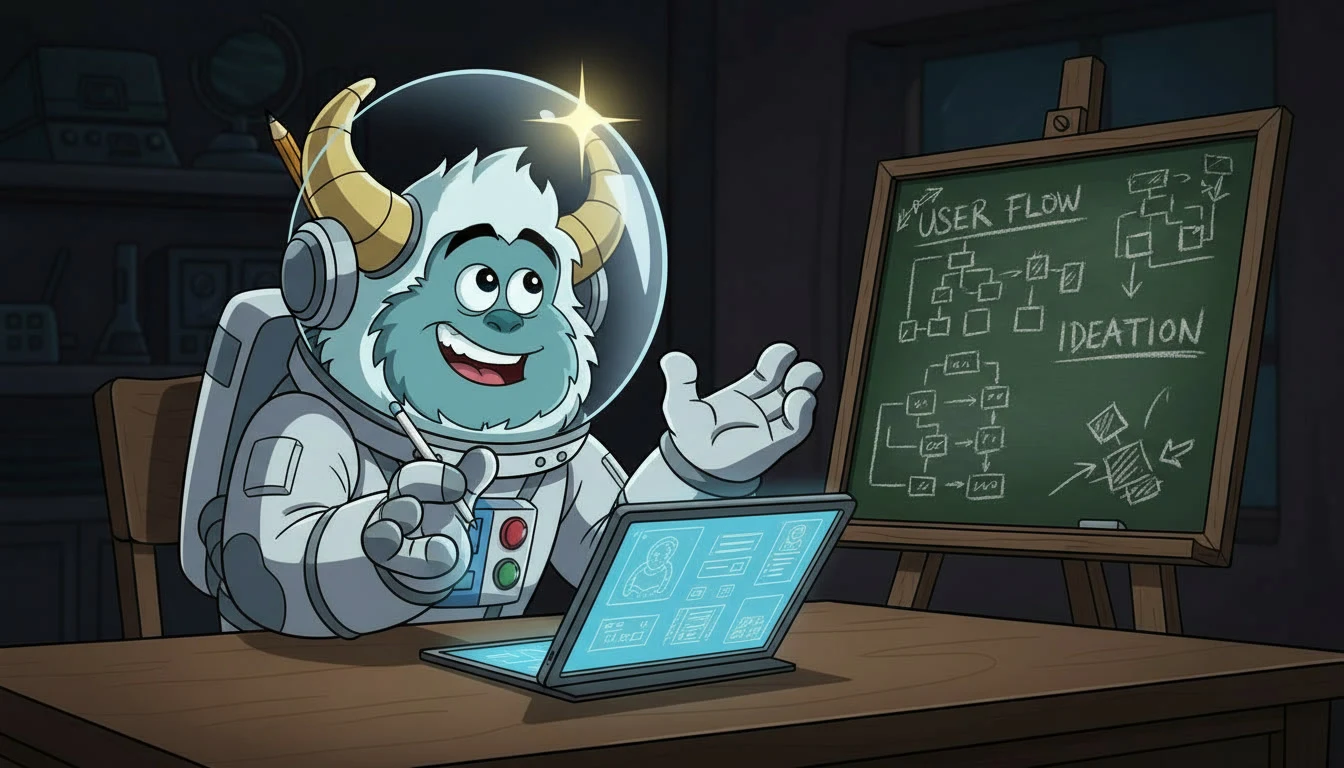
I created The UX Yeti in 2001, just after graduating from FSU, as a way to carve out a distinct identity in a crowded job market. The name was inspired by my love of fantasy creatures and the playful phonetic similarity between “UX” and “Yeti.” I brought it to life with a character logo and an online presence, and over time it became a defining part of my professional brand.
My Story
Zach began his career in California as an industrial designer and fabricator, working in aerospace and automotive before modern UI as we know it existed. His early projects included machining parts for the Hubble Telescope mission, building interiors for a military mobile command center, creating a touch-enabled infrared topographic mapping system, and fabricating scale models for the NSA.
After two years in fabrication, he transitioned into interface design through a multi-year project reinventing the instrument cluster, heads-up display, and center console systems for GM luxury vehicles—work completed before the iPhone era and foundational to his approach to clarity, ergonomics, and human factors.
When mobile applications emerged, Zach found the perfect intersection of logic, systems, creativity, and usability. His background in military and space design shaped his philosophy of minimalism, atomic systems, and simple, intention-driven interactions. Over the past twenty years, he has designed hundreds of products across fintech, aerospace, defense, VR, Web3, AI, ecommerce, and enterprise SaaS.
He’s known for quickly diagnosing complexity, simplifying it, and delivering systems that scale. As both an IC and a product partner, Zach drives 0→1 development, aligns teams, and builds design environments rooted in clarity and measurable results.
In recent years, his focus has centered on AI-native workflows, agentic UX, advanced data-driven interfaces, fintech innovation, blockchain, and immersive experience design. He believes the next era of interfaces blends automation, reasoning, and clarity—and he’s dedicated to helping modern teams build toward it.